CYCLES OF THE SOUL:
EXPLORATION OF DEATH & BEYOND
Part 1: Understanding the Journey of the Soul
Death is one of the few experiences that touches every human life, yet it remains one of the subjects we are least encouraged to understand. We prepare for births, marriages, careers and nearly every other major transition, but when it comes to death, many of us are left with fear, uncertainty and very little understanding of what may actually be taking place.
Shamanic and spiritual traditions throughout the world have long viewed death differently. Rather than seeing it simply as the moment when the physical body stops functioning, death is understood as a process, a transition in which the soul gradually releases its relationship with the physical body and moves into another state of existence.
Learning about this process can profoundly change the way we experience death. It can help us remain more present when someone we love is dying, understand some of the unusual experiences that may occur near the end of life, and recognize that there may be much more happening than what we can observe physically. It can also help us become less frightened of our own eventual death and more conscious of the life we are living now.
Cycles of the Soul explores both sides of this threshold. Part One is an exploration of the death process itself and is open to anyone who feels called to better understand this important cycle of the soul. Part Two moves into advanced shamanic practitioner work and the role of the psychopomp, the one who assists souls that need help completing their transition beyond the physical world.
The parts may be taken together, or Part One may be attended independently.
There can be tremendous comfort in understanding what is happening when someone is dying.
What we often perceive simply as the body shutting down may also be understood spiritually as a gradual withdrawal of consciousness and life force from the physical form. Many traditions describe stages to this process, including changes within the energy body, the chakras, the senses and the elements from which the physical body is formed. As the connection with the physical world begins to loosen, awareness may also begin turning toward something beyond it.
We will explore the death process from physical, energetic and shamanic perspectives, looking at the changes that may occur in the weeks, days and hours surrounding death. Within the energetic traditions we will discuss how the aura and chakras may change as life force withdraws, the movement of energy upward through the body, the loosening of the connection between the physical and spiritual bodies, and the different spiritual teachings surrounding the soul's eventual release.
We will also look at the traditional understanding of the elements during death. Earth, water, fire, air and ether are not only understood as elements of the natural world, but as part of our physical and energetic composition. Several Eastern traditions describe death as a gradual dissolution of these elements and the senses connected with them. Experiences such as losing interest in food, becoming increasingly thirsty yet unable to drink, feeling cold, becoming physically heavy or weak, changes in breathing and the gradual withdrawal from the external world can be viewed through this much older understanding of the dying process.
As consciousness begins to turn away from ordinary physical reality, other experiences may become more prominent.
People approaching death frequently speak to or see deceased relatives, friends, spiritual guides or religious figures whom others in the room cannot see. Some describe beautiful landscapes, light, music or a sense that someone has arrived to meet them. Others become unusually clear after periods of decline, awaken to say goodbye, speak about an upcoming journey, or seem to know that death is approaching before there is an obvious physical indication.
Western culture has often dismissed these experiences as confusion or hallucination. Within shamanic traditions, near-death accounts and many spiritual teachings, they may instead be understood as part of the changing relationship between the physical and spiritual worlds as the person approaches the threshold of death.
Understanding this possibility can be tremendously important for those sitting beside someone who is dying. Instead of immediately correcting the person, dismissing what they are experiencing or becoming frightened by it, we can learn to listen. We can allow their experience to unfold and become a steady, loving presence while they move through a process that belongs to them.
An important focus of Part One will therefore be how we support the dying.
There may be unfinished conversations, unresolved relationships, fear for those who will remain behind, old wounds requiring forgiveness, or simply a reluctance to leave the people and life that have been loved. Sometimes one of the greatest gifts we can offer is permission to let go. We will discuss compassionate ways of supporting this process without imposing our own beliefs or needs upon the person who is transitioning.
We will explore the use of prayer, spiritual support, helping spirits, ancestors and loved ones in spirit; energetic clearing and support of the chakras; forgiveness and relationship healing; releasing cords and unfinished attachments; and ways of creating a peaceful environment around the dying person.
We will also look at the period immediately following death. Many traditions recognize that the transition of consciousness may not correspond neatly with the medical declaration of death and therefore treat the body and the surrounding space with tremendous respect during this period. We will discuss spiritual death rites, the release of the energetic body, the Great Death Spiral and other teachings surrounding the final separation of the soul from the physical form.
This is not about finding one definitive answer to what happens when we die. It is an opportunity to explore teachings that have existed across spiritual and shamanic traditions for centuries, compare them with experiences that continue to be reported at the bedside today, and develop a much deeper relationship with a process that every soul will eventually encounter.
Understanding death does not have to make life darker. Very often it does the opposite. When death becomes less foreign, we can be more present with those we love, less frightened by the unknown and more aware of the preciousness of the life that is here now.
Offered only once each year typically in the winter.
Next Class 2026
Part One is open to anyone wishing to understand the process of death and dying more deeply. You do not need to be a healer or shamanic practitioner, and no previous shamanic experience is required. You do not need to be a healer or intend to practice shamanism to attend.
Offered by Sierra. In person participation only.
$166
Please bring a cloth to use as an eye cover, notebook, & pen.
This is a core course for our Shamanic Practitioner Certification Program.
Join us and experience how shamanism can transform the way you see yourself and the world around you, while awakening the power within your soul!
Part 2: Shamanic Extraction Training - Essential Skills & Practice
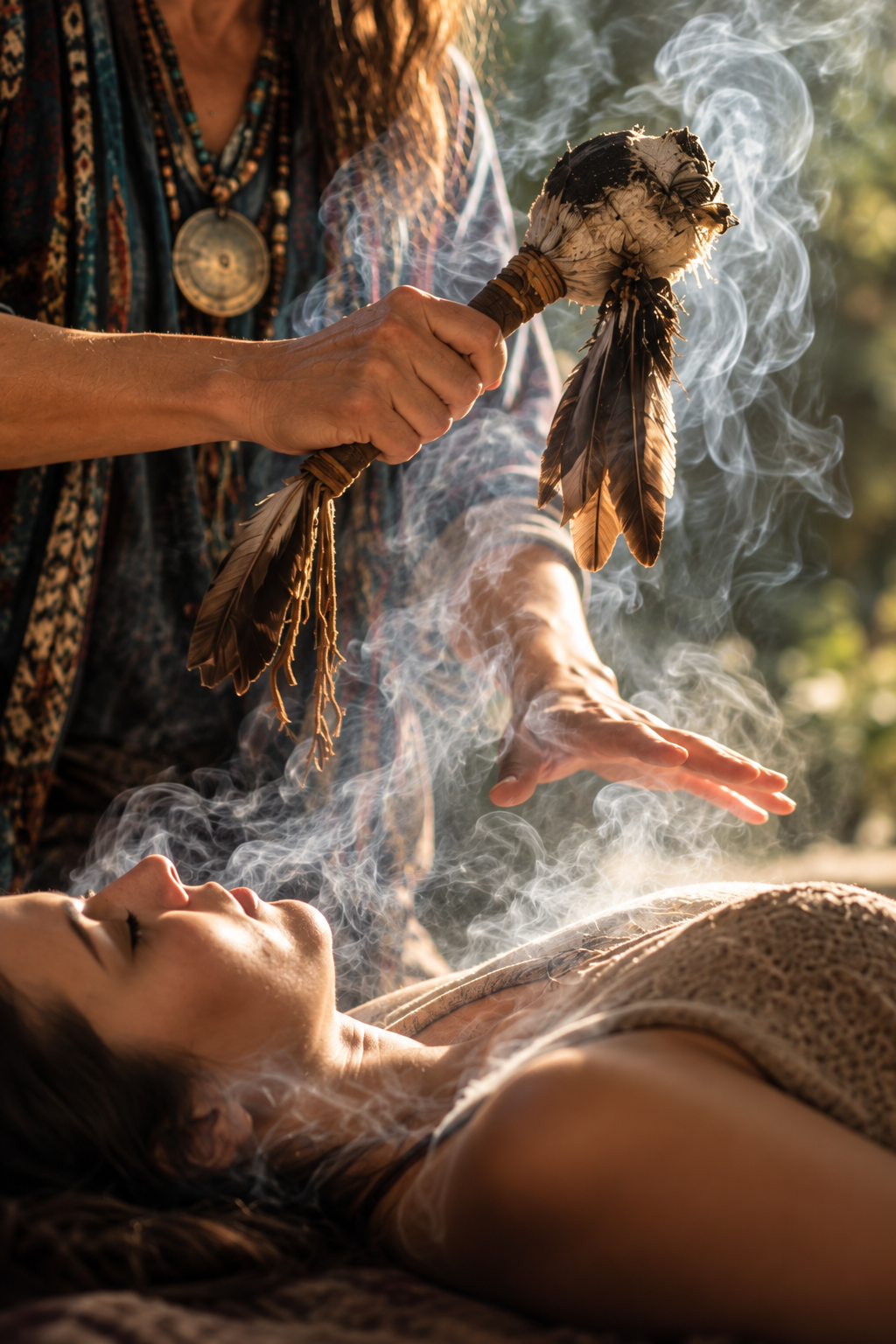
A psychopomp is a guide of souls.
The word comes from the Greek psyche, meaning soul or life, and pompos, meaning guide or conductor. Although the word itself is Greek, the role is universal. Stories of beings who guide the dead appear throughout cultures around the world. Angels, ancestors, birds, dogs, horses, deities and other spiritual beings have all been understood at different times as those who help souls move from one world into another.
The shaman has also traditionally served as a psychopomp.
Because shamanic practice is built upon the ability to consciously enter the unseen worlds and return, the experienced practitioner becomes familiar with navigating territory that lies beyond ordinary physical reality. The shaman's helping spirits become companions and guides within that territory, allowing the practitioner to assist when another soul has difficulty finding its own way.
Most people do not require a psychopomp. Death itself is a natural process, and many souls transition with the assistance of ancestors, spiritual guides or other beings already waiting for them.
There are times, however, when a soul may remain connected to the Middle World rather than continuing forward.
A death may have occurred suddenly and the person may not fully understand that they have died. A soul may remain attached to familiar people, places, possessions, addictions or desires. There may be unfinished business, guilt, fear of judgment, trauma surrounding the death, deeply held religious beliefs about punishment, or a loved one who is desperately holding on. Some spirits may simply be confused and need help understanding what has happened and where they can go from there.
The role of the psychopomp is not to judge these souls and it is not to force them anywhere.
It is to approach them with compassion, understand why they remain where they are, and when they are willing, help them reconnect with the guides, ancestors or spiritual pathways that can carry them forward.
We will begin by learning how to journey with our helping spirits specifically for psychopomp work. Students will learn how to locate a soul within nonordinary reality, establish safe communication, discern what is keeping the individual connected to the Middle World and determine what healing or assistance may be required before transition can occur.
Sometimes the work is surprisingly simple. A soul may only need to understand that death has occurred or recognize the ancestors and guides who have arrived to meet them.
Other situations may be much more complex.
A spirit may feel undeserving of peace. There may be unresolved trauma, guilt, relationship wounds or fear that must first be addressed. Some may be so identified with the circumstances of their death that they remain caught within that story. Others may have experienced significant soul loss during life and require additional shamanic healing before they are ready to move forward.
This is why psychopomp work requires more than the ability to perceive the dead. It requires compassion, discernment, patience, strong relationships with helping spirits and the ability to recognize what is actually needed rather than assuming that every situation should be handled in the same way.
We will explore the many spiritual allies that may become involved in this work, including helping spirits, healed ancestors and other beings who act as guides for the deceased. Across cultures, countless forms of psychopomp have been recognized, from Anubis and Hermes to Archangel Michael, Jizo, the Valkyries, animal guides, ancestral beings and personal spiritual guides. The particular form is less important than understanding the universal function they serve: helping consciousness move safely across a threshold.
An important distinction will also be made between psychopomp work and mediumship.
The psychopomp's primary purpose is not to bring messages from deceased people back to the living. Our responsibility is to the health and movement of the soul itself. There are times when communication may be part of understanding unfinished business, but the intention is not to keep the deceased anchored to the physical world.
Healthy boundaries between the living and the dead are an essential part of this work.
Grief naturally creates a powerful desire to remain connected with someone we love. Yet many traditions teach that immediately and repeatedly pulling the newly deceased back toward the living can interfere with their own process of transition. Part of learning psychopomp work is understanding when communication is appropriate, when release is needed and how to honor the sovereignty of both the living and the dead.
From there we will expand the work into homes, buildings and land.
Places can hold history. Trauma, death, violence, displaced spirits, accumulated emotional energy and disturbances within the land itself may leave an energetic imprint that affects the people and animals who live there. What appears to be a haunting or uncomfortable space may involve a deceased soul, but it may also involve stagnant energy, disruption within the land, the spirits of place or something entirely different.
Students will learn to approach these situations through shamanic journey and discernment rather than assumption. We will explore ways of communicating with the spirits of the land and place, identifying what is actually present, assisting souls when psychopomp work is needed, clearing displaced or disruptive energy and restoring healthier boundaries and greater balance within the environment.
Although these techniques are taught through a shamanic framework, the understanding gained through this work can support many other healing practices. Learning to recognize the difference between emotional energy, energetic intrusion, the presence of the deceased, land disturbance and other spiritual phenomena gives the practitioner a much broader map of the unseen worlds and greater discernment when working with clients.
Psychopomp work asks us to stand at one of the most sacred thresholds of human existence. It requires the ability to remain grounded in the presence of fear, grief, trauma and the unknown while continuing to work from compassion rather than fear. When approached with respect, it becomes far more than simply “crossing spirits over.” It is the work of helping restore the natural movement of the soul.
Offered only once each year typically over the winter.
Next Class Sat Oct 31st 2026
Part Two is advanced practitioner training. Students should have strong shamanic journey skills, established relationships with their helping spirits and the ability to hold compassion, discernment and appropriate energetic boundaries while working within the unseen worlds. It can be helpful to naturally sense or know when deceased spirits are present, although this is not required.
Students must have completed either Shamanic Extraction or Crystal Dreaming training with Sierra.
Offered by Sierra. In person participation only.
$166
Please bring a cloth to use as an eye cover, notebook, & pen.
This is a core course for our Shamanic Practitioner Certification Program.
Join us and experience how shamanism can transform the way you see yourself and the world around you, while awakening the power within your soul!